

You’re planning a back-to-school event for 100+ kids, and someone just suggested bounce houses. Now you’re wondering: how many do we actually need? What’s safe for a school carnival? How does this work for a church fellowship or neighborhood block party?
This guide walks through the real planning considerations for back-to-school events with inflatables—from school carnivals and PTA fun days to church bashes and neighborhood meet-and-greets. You’ll understand capacity planning, safety logistics, setup requirements, and how to match inflatable types to your specific event format.
By the end, you’ll know exactly what questions to ask rental companies and how to structure your event so kids have fun and organizers stay sane.
What You’ll Learn
- Which event types work best with inflatables
- How to calculate bounce house capacity for large groups
- Safety setup requirements for school and church properties
- What types of inflatables fit different age groups
- Adult supervision models that actually work
- Delivery, power, and space logistics for large events
- Common questions about permits, insurance, and timing
Who This Guide Is For
🏫 School Event Organizers
You’re planning a PTA fun day, carnival, or field day for 150–400 students. You need to know how many units keep lines moving, how to handle mixed grade levels, and what the principal needs to approve.
⛪ Church Event Coordinators
Your congregation is hosting a back-to-school bash or fellowship event. You want families to stay for two hours, need activities for preschool through middle school, and you’re working with a volunteer committee and a modest budget.
🏘️ Neighborhood Organizers
You’re coordinating a block party or HOA meet-and-greet to kick off the school year. You need something for kids so parents can actually socialize, but you don’t have a massive budget or a huge footprint.
Which Back-to-School Event Formats Work Best with Inflatables
Not every back-to-school gathering needs bounce houses. But certain event structures naturally benefit from inflatables because they create defined activity zones, keep kids engaged without constant adult interaction, and work well with staggered arrival times.
School Carnivals and PTA Fun Days
These are high-attendance, multi-hour events held on school grounds—typically the Friday before school starts or the first weekend. Attendance ranges from 150 to 500+ students and families. Schools often combine inflatables with food trucks, game booths, and teacher meet-and-greets.
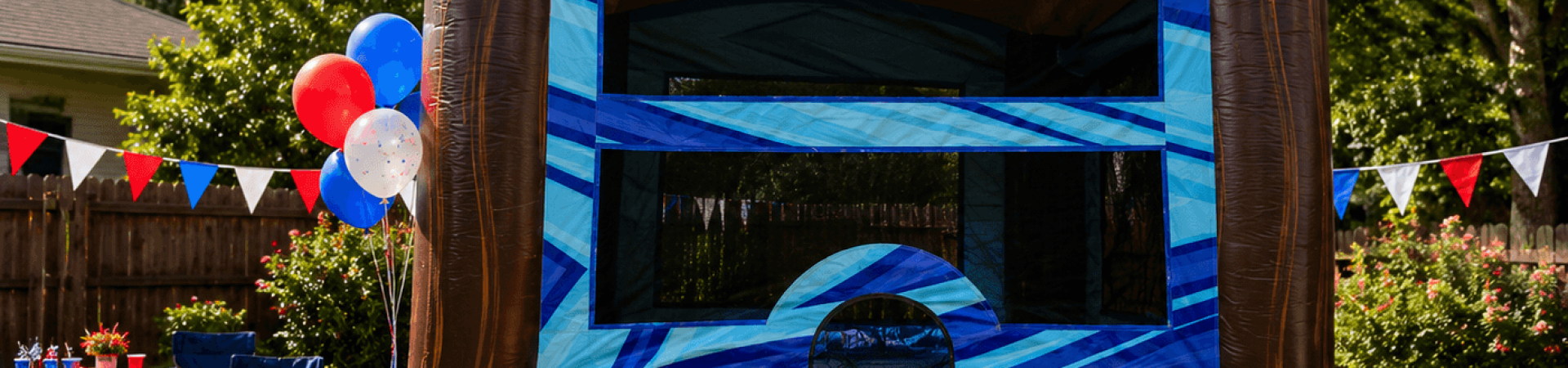
What works: 3–5 bounce houses positioned in different zones (primary grades, intermediate, pre-K corner). Combo units with slides or obstacle courses handle higher throughput than basic bounce houses. Set up near the playground or athletic fields where there’s already open space and shade structures.
Church Back-to-School Bashes
Churches host these as outreach or fellowship events—often free or low-cost to the community. Typical attendance: 50–200 people. These run 2–3 hours, usually Sunday afternoon or a weeknight. Many churches add backpack giveaways, school supply donations, or prayer stations.
What works: 2–3 inflatables that span age ranges. One large combo unit for elementary-age kids, one smaller themed bounce house for toddlers/preschoolers, and optionally a game like a basketball shootout or obstacle course for older kids. Churches often have access to parking lots with power outlets, which simplifies setup.
Neighborhood Block Parties and HOA Socials
These are smaller, informal gatherings—usually 30–80 attendees—where the goal is to help families reconnect before school starts. Inflatables serve as the main kid activity so parents can talk without constant interruptions.
What works: 1–2 bounce houses, often with a water slide if it’s August. Set up in a cul-de-sac, common area, or someone’s large yard. These events are casual—arrivals are staggered over 2–3 hours rather than everyone showing up at once.
💡 Pro Tip: If your event includes food service or a program (like a principal’s welcome or blessings), position inflatables away from the main stage or seating area. Kids queuing for bounce houses create noise that competes with speakers.
How to Calculate Bounce House Capacity for Large Groups
The most common planning mistake is assuming one bounce house can handle 100 kids. It can’t. Not safely, and not without 45-minute wait times that frustrate parents and kids.
Here’s how professional event planners calculate inflatable capacity for large groups:
Start with Occupancy Limits Per Unit
Most standard bounce houses safely hold 8–12 kids at a time, depending on size and age. Combo units with slides can handle slightly more because kids cycle through faster. Toddler units max out at 4–6 because little kids need more space to move safely.
The manufacturer’s weight capacity (usually 1,000–1,500 lbs) matters less than the physical space inside the unit. Overcrowding creates collision risks and limits actual bouncing.
Factor in Rotation Time
Kids typically play in a bounce house for 5–10 minutes per session. At school events, you’ll rotate groups to keep lines moving. A single bounce house can realistically serve 30–50 kids per hour with active management.
For a 3-hour event with 200 kids, you’d need at least 3–4 bounce houses to ensure every child gets multiple turns without excessive waiting.
Small Event (50–75 kids)
2 bounce houses
- One combo unit for ages 5–10
- One smaller bounce for ages 3–5
- Total capacity: 60–80 kids/hour
Medium Event (150–200 kids)
3–4 bounce houses
- Two large combo units
- One obstacle course or slide
- One toddler zone
- Total capacity: 120–150 kids/hour
Large Event (300+ kids)
5–6 bounce houses minimum
- Three combo units (different themes)
- One large obstacle course
- One interactive game (basketball, soccer)
- One dedicated toddler area
Age-Grouping Strategy
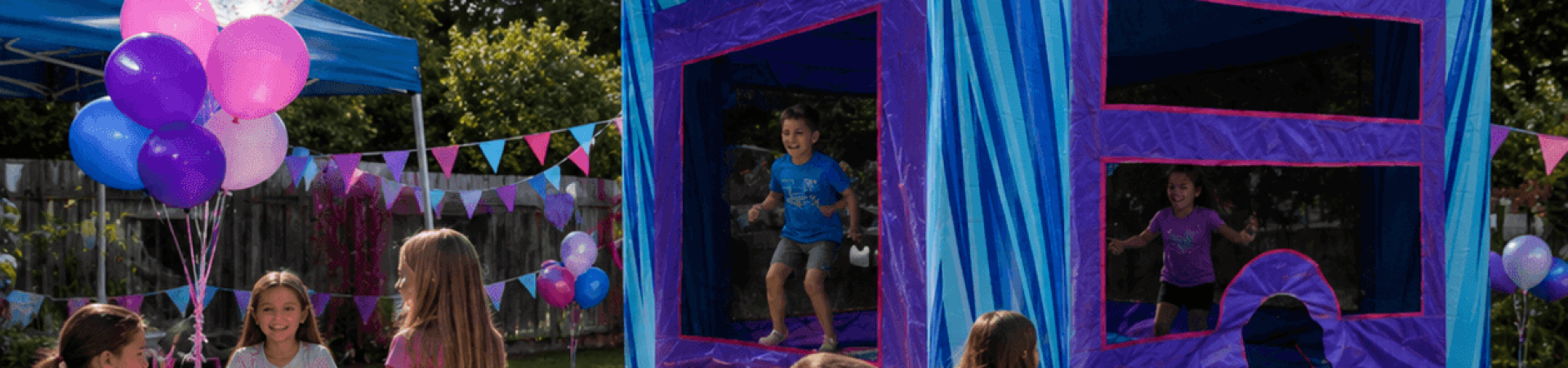
Never mix toddlers with older elementary kids in the same unit. Size and energy mismatches cause 90% of bounce house injuries at school events. Designate specific units for age groups and enforce it with signage and adult monitors.
Smart grouping: Ages 3–5 (toddler unit), Ages 5–8 (standard bounce house), Ages 8+ (obstacle course or competitive games).
Safety and Setup Requirements for School and Church Properties
Schools and churches have specific site conditions and safety protocols that differ from backyard parties. Understanding these upfront prevents last-minute scrambles.
Space and Surface Requirements
Each bounce house needs a minimum 3-foot clearance on all sides. A standard 15×15 bounce house actually requires a 21×21 setup zone. Combo units with slides need 25–30 feet of length.
Surface matters: Grass is ideal. Asphalt and concrete work but require sandbag anchoring instead of stakes. Avoid sloped areas—inflatables must sit on level ground. Check for overhead hazards like tree branches or power lines; units need 20+ feet of vertical clearance.
Power and Electrical Access
Each inflatable requires a dedicated 15-amp circuit. You cannot daisy-chain multiple units on a single outlet. Schools usually have exterior outlets near gyms or maintenance buildings. Churches often have accessible power in parking lots or fellowship halls.
Walk the site with your facilities manager or custodian before booking. If outlets are 100+ feet from your setup zone, you’ll need industrial-grade extension cords (12-gauge minimum). Most rental companies provide these but confirm ahead of time.
⚠️ Caution: Never run inflatables on the same circuit as sound systems, food trucks, or other high-draw equipment. Breaker trips mid-event deflate units with kids inside—a safety issue and instant panic situation.
Anchoring and Weather Protocols
Professional setup includes heavy-duty stakes (grass) or sandbags (pavement)—typically 4–6 anchor points per unit. Reputable companies won’t skip this even if it “looks calm.”
Wind policy: Most operators deflate and secure units if sustained winds exceed 15–20 mph. If your event is outdoors in August or September, have a weather contingency plan. Afternoon thunderstorms are common—make sure your rental contract specifies who monitors conditions and makes the call to shut down.
Delivery and Pickup Logistics
Schools often lock gates or have limited vehicle access during non-school hours. Confirm delivery windows and access points with your principal or facilities manager. Rental companies need 60–90 minutes for setup of multiple units.
Pickup timing: Don’t schedule pickup right at your event end time. Kids will still be bouncing, and deflating units takes 20–30 minutes. Build in a 30-minute buffer.
What Types of Inflatables Work Best for Different Age Groups
Not all bounce houses are created equal. Unit type affects throughput, safety, and how long kids stay engaged. Here’s how experienced event planners match inflatables to age groups:
Ages 3–5 (Preschool)
Best choice: Small themed bounce houses with low entry points
- Lower ceiling height (less intimidating)
- Gentle bounce surface
- Easy-to-climb entrance step
- Bright colors and characters
Avoid: Slides, obstacle courses, or units with climbing walls—too advanced and risky for this age.
Ages 5–10 (Elementary)
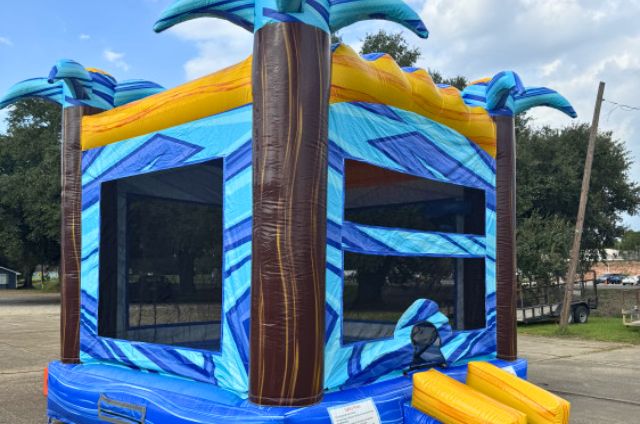
Best choice: Combo units with slide attachments
- Higher throughput (kids exit via slide)
- More activity variety in one footprint
- Bright tropical or adventure themes
- Built-in basketball hoops or climbing features
This is your highest-volume age group—invest in multiple units here.
Ages 10+ (Middle School)
Best choice: Obstacle courses and competitive games
- Challenge-based (not “babyish”)
- Head-to-head racing formats
- Basketball, soccer, or jousting inflatables
- Wipeout-style obstacle courses
Older kids need competition or skill elements to stay interested.
Water Slides vs. Dry Units for August Events
Back-to-school season in the South means 90°+ heat. Water slides keep kids cooler and extend play time, but they add logistical complexity: you need hose access, a water source within 50 feet, and drainage considerations.
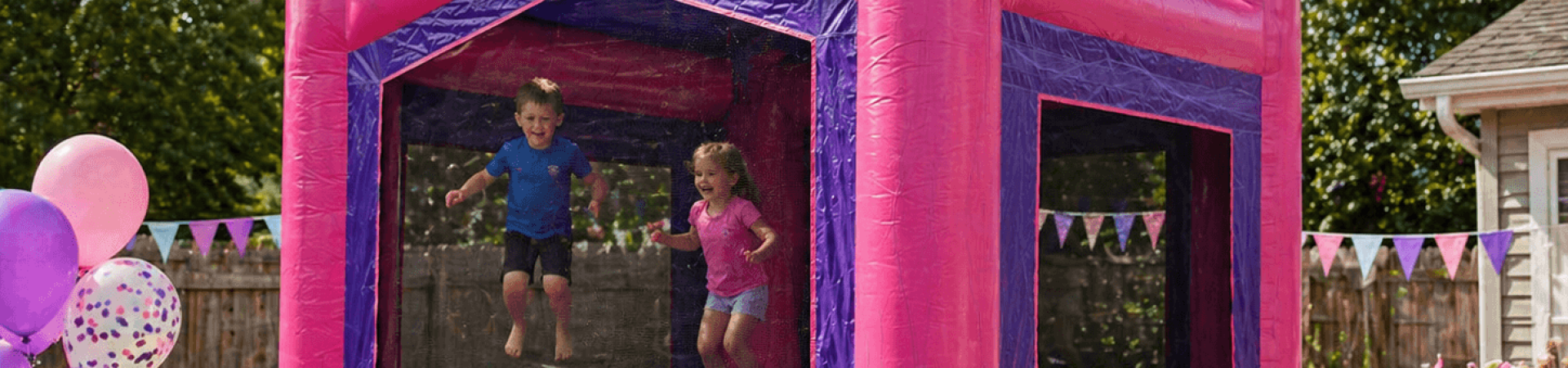
Many planners do a hybrid setup: one water slide + 2–3 dry bounce houses. This accommodates kids who forgot swimsuits and avoids everyone clustering around the single water unit.
If you’re exploring ideas for other seasonal events, the guide on spring birthday party ideas offers context on matching inflatables to weather conditions.
Adult Supervision Models That Actually Work for School Events
The difference between a smooth event and chaos often comes down to how you staff bounce house supervision. Rental companies deliver and set up inflatables, but they don’t provide attendants. That’s your responsibility.
One Adult Per Unit (Non-Negotiable)
Each bounce house needs a dedicated adult monitor. Their job: enforce capacity limits, watch for rough play, make sure kids remove shoes and glasses, and separate age groups if younger kids wander over.
This is not a roaming role. The monitor stands at the entrance, stays alert, and doesn’t get pulled into conversations or phone time. For 3-hour events, rotate monitors every 30–45 minutes so no one burns out.
Volunteer Shift Schedule
Don’t rely on people “volunteering day-of.” Assign shifts ahead of time with specific names and times. Use a signup tool (SignUpGenius, Google Sheets) and confirm 48 hours before the event.
Sample rotation for 3 bounce houses over 3 hours = 18 volunteer slots (30-minute shifts). Have 2–3 backup names for no-shows.
🚫 Non-Negotiable: Never leave bounce houses unattended, even for “just a minute.” Kids will test limits the second an adult walks away. Unmonitored units are liability nightmares.
Briefing Your Monitors
Hold a 5-minute briefing before your event opens. Cover:
- Capacity limits — “No more than 10 kids at once”
- Age enforcement — “This unit is K-2nd grade only”
- Safety rules — No shoes, no food/drink, no flips, no climbing on walls
- Weather protocol — Who makes the shutdown call and how they’ll signal you
- Emergency contact — Where the event coordinator is at all times
Print these rules on a laminated card and give one to each monitor.
Planning Timeline and Budget Reality for Large Events
Back-to-school events fill rental company calendars fast. Timing and budget planning prevent stress and disappointment.
When to Book
6–8 weeks out is the sweet spot for late August / early September events. Popular weekends (Labor Day weekend, first full weekend of September) book up 10+ weeks in advance.
Last-minute availability exists but limits your options. If you’re locked into a specific date, book early. If you have flexibility, you can sometimes get deals on less-popular time slots (Friday afternoon vs. Saturday).
↓ What Keeps Costs Down
- Booking 6+ weeks in advance
- Weekday or Friday afternoon slots
- Standard 4-hour rental vs. all-day
- Picking units already available (not custom orders)
- Flexible rain date policy
↑ What Pushes Costs Up
- Last-minute bookings (under 2 weeks)
- Saturday peak times
- Adding water slides (requires more setup)
- Sites with difficult access or long setup distances
- Generator rentals (if no power available)
Realistic Budget Expectations
Inflatable rental costs vary by market, but here’s a general framework:
- Single bounce house: $200–$350 for 4 hours
- Combo unit with slide: $300–$500
- Large obstacle course: $400–$700
- Water slide: $350–$600
A typical school carnival setup (3 bounce houses + 1 obstacle course) runs $1,000–$1,600 for 4-hour rental. Church events with 2–3 units average $600–$900. Many companies offer package discounts for multiple units.
What to Ask Rental Companies
Before signing a contract, clarify:
- Setup and takedown timing — Do they arrive an hour early? Stay after?
- What’s included — Stakes/sandbags, extension cords, blowers
- Weather cancellation policy — Refund? Reschedule? Credit?
- Insurance certificate — Can they provide one for your school/church?
- On-site contact — Who do you call if a blower stops mid-event?

For more ideas on structuring stress-free events, see the resource on how parents plan stress-free parties—many of the same principles apply to large group events.
Red Flags to Watch for When Choosing a Rental Company
Not all rental companies operate at the same standard. Schools and churches need reliable partners because you’re serving large groups of kids and can’t afford equipment failures or no-shows.
🚩 No written contract or vague terms
Verbal agreements lead to disputes. Legitimate companies provide clear contracts with pricing, delivery times, and cancellation policies.
🚩 Can’t provide insurance certificate
Schools and churches often require proof of liability coverage. If a company hesitates or says “we don’t do that,” walk away.
🚩 Rock-bottom pricing that seems too good
Drastically low prices often mean worn equipment, unreliable delivery, or hidden fees that appear later.
🚩 No site visit or questions about your space
Professional operators ask about power access, surface type, and setup area. If they don’t, they’re not thinking through logistics.
🚩 Unclear about who handles setup/takedown
You’re not responsible for inflating or anchoring equipment. That’s the company’s job. Confirm this explicitly upfront.
🚩 No communication 48 hours before event
Reputable companies confirm delivery windows, contact info, and final details 1–2 days ahead. Radio silence is a warning sign.
To see what properly maintained equipment and organized setups look like, browse examples in the bounce house event gallery.
How Other Seasonal Events Use Inflatables (Context for Year-Round Planning)
Back-to-school isn’t the only peak season for school and church events with inflatables. Understanding how planning differs across the year helps you apply these lessons to future gatherings.
Spring events (end-of-year celebrations, Easter egg hunts) face similar crowds but cooler weather—fewer water slides, more focus on dry combo units. The guide on end-of-school party ideas covers capacity and supervision for May events when energy levels run high.
Holiday events add theming complexity. Mardi Gras bounce house party tips walk through how regional celebrations integrate inflatables with parades and costume elements. 4th of July party ideas address evening events and patriotic theming.
The core principles stay consistent: calculate capacity per unit, assign dedicated monitors, book early for peak dates, and match inflatable types to age groups. What changes is weather contingency planning and theming options.
Frequently Asked Questions About Back-to-School Event Inflatables
What size bounce house do I need for a school carnival with 200+ kids?
+
For large school carnivals with 200+ students, plan on 3–4 bounce houses minimum. A single unit typically accommodates 8–12 kids at a time with safe rotation. Look for units that handle high capacity efficiently—combo units with slides and obstacle courses keep lines moving. Space them across different zones so kids aren’t all clustering in one area. Many schools rent a mix: 2 large combo units for primary grades and 1–2 smaller themed units for younger students.
How much does it cost to rent inflatables for a church back-to-school bash?
+
Church back-to-school events typically run $600–$1,200 for inflatables, depending on attendance and rental duration. A basic package (2 bounce houses + 1 game) for 50–75 kids starts around $600 for 4 hours. Larger congregations expecting 150+ attendees usually invest $900–$1,200 for 4–5 units. Many rental companies offer church discounts or extended hours for community events. The investment breaks down to just a few dollars per family when you calculate cost per attendee.
Are bounce houses safe for elementary school age groups?
+
Yes, when properly supervised and age-grouped. The key safety factor is separating by size and age—don’t mix kindergarteners with fifth graders. Assign adult monitors to each unit who enforce capacity limits (usually 8–10 kids) and watch for rough play. Professional rental companies provide units that meet ASTM safety standards with reinforced seams, proper anchoring systems, and safety netting. Most school incidents happen from overcrowding or mixed age groups, not equipment failure.
Do I need insurance or permits for a PTA fun day with inflatables?
+
Most public schools already carry liability insurance that covers sanctioned PTA events on school property. Verify with your principal or district office before booking. Churches typically have event coverage through their general liability policy. Permits are rarely required for private property events. Reputable rental companies carry their own commercial insurance and provide certificates of insurance upon request. If your event is open to the public or on public property (like a park), check with your city’s special events office about permits.
How far in advance should we book inflatables for a school carnival?
+
Book 4–6 weeks out for back-to-school events in August and early September. This is peak season for school and church events—weekends fill up fast. If your event falls on Labor Day weekend or the first two weekends of September, book 8 weeks ahead. Last-minute availability exists but limits your choices. Early booking also gives you time to coordinate delivery logistics, secure electricity access, and arrange parent volunteers for supervision.
What’s the best setup for a neighborhood block party with bounce houses?
+
Position bounce houses in shaded areas or provide canopy tents—August heat makes vinyl surfaces hot. Set up on flat grass or asphalt with at least 3 feet of clearance on all sides. Place units where parents have clear sightlines from gathering areas. For block parties, 1–2 medium bounce houses work for 30–50 kids with staggered arrival times. Add a water slide if you have hose access and want to extend play time. Assign rotating parent shifts (30 minutes each) so no one misses the whole party monitoring kids.
Ready to Plan Your Back-to-School Event?
Whether you’re organizing a school carnival, church bash, or neighborhood meet-and-greet, planning early and understanding logistics makes the difference between smooth fun and last-minute chaos.
No pressure, no pitch—just helpful answers to your questions about capacity, timing, and setup.
Or call +1 (337) 442-7617 to talk through your event details